Continuous emission monitoring systems (CEMS)
Why plants install CEMS
Under the Philippine Clean Air Act (RA 8749) and DENR rules, many stationary sources must monitor their stack emissions continuously and report the results. A CEMS samples the flue gas, measures pollutants such as SO₂, NOₓ, CO and particulates, and records the data your compliance reports depend on.
Your environmental officer should confirm which parameters your permit requires. We design the system around that list.
How a CEMS project runs
- 1
Survey and design
We review the stack, the permit parameters and the site, then design the sampling and analyser system.
- 2
Supply
Analysers, sampling probes, conditioning and the data acquisition system, sourced from manufacturers such as Siemens and Horiba.
- 3
Integration
Our in-house team builds and integrates the analytical system and its shelter or cabinet.
- 4
Installation and commissioning
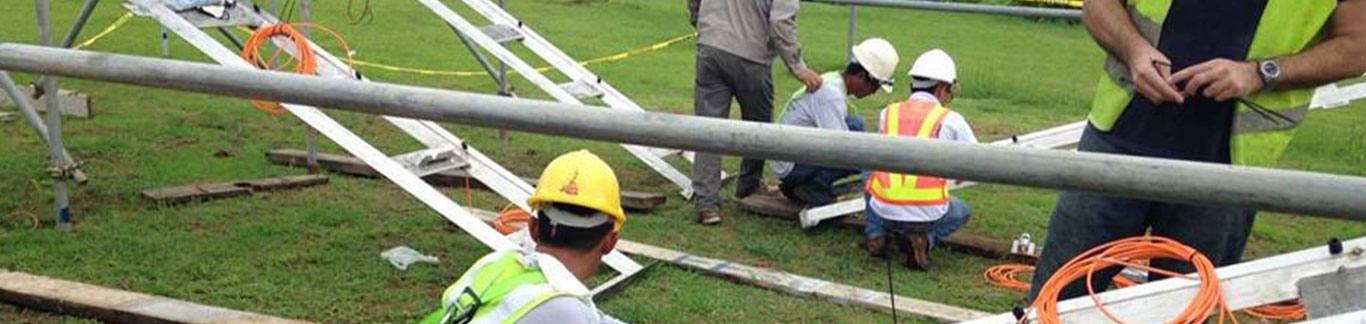
We install, loop-check and commission the system on site, and train your operators.
- 5
Calibration and maintenance
Scheduled calibration, spare parts and service contracts keep the data valid for reporting.
Reference project
In 2020 EMCC won a turnkey CEMS contract covering 14 smokestacks at a 150 MW modular diesel power plant in Pililla, Rizal, one of the largest single CEMS contracts in the Philippines. The project established EMCC as a full analytical system integrator.
Planning a new CEMS or fixing one that fails audits?
Send the number of stacks, fuel type and the parameters on your permit. We will propose a system and a schedule.